Vietnam by Bicycle: An Expert Local Guide Answers Your Biggest Questions

Exploring Vietnam by bicycle is perhaps the most immersive way to discover the country.
Of course, the landscapes are extraordinary: the stepped paddies, the forested limestone spires of Ha Long Bay, the waterways of the Mekong Delta.
But taking to the saddle allows you to adventure that little bit slower and really take it all in.
If you’ve not been before, you may have a few questions. That’s why we pitched your most common questions to Thanh Vo, one of our top cycling tour leaders in Vietnam, who’s been sharing his country with Exodus travellers since 2012. So, take it away, Thanh.
What makes Vietnam good for cycling holidays?

Vietnam is one of Southeast Asia’s most rewarding destinations for a cycling tour because the landscapes change dramatically from region to region. You can ride through lush green rice fields, fishing villages, coastal roads, majestic mountain passes, orchards, and small rural communities, often within the same journey.
What makes Vietnam especially attractive is the combination of scenery, food, culture, and daily local life. Cycling allows you to slow down and experience details often missed by vehicle, from roadside markets and coffee stops to village routines and family-run food stalls.
What are the best cycling routes in Vietnam?

Vietnam offers cycling routes for different interests and fitness levels, though a classic journey combines several regions, often from Ho Chi Minh City to Hanoi, providing a full picture of southern, central, and northern Vietnam.
For easier and more relaxed cycling, the Mekong Delta is ideal. The terrain is mostly flat, with quiet lanes, canals, orchards, local markets, and rice fields. It is a good choice for beginners or riders who prefer culture and scenery over challenging climbs.
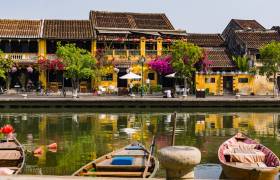
For coastal riding, Central Vietnam is one of the country’s highlights. The route from Hue to Hoi An, including the famous Hai Van Pass, offers a strong mix of mountain views, ocean scenery, fishing villages, and cultural towns. Further south, areas such as Quy Nhon, Nha Trang, and Phan Thiet also offer scenic coastal sections.
For dramatic mountain scenery, Ha Giang and Sapa in the far north are among the most rewarding areas, with steep climbs, winding passes, ethnic minority communities, and spectacular highland views. These routes are best suited to stronger riders.
When is the best time of year to cycle in Vietnam?


The best time depends on the region, as Vietnam has different weather patterns from north to south. In general, December to May offers the most comfortable overall conditions for a cycling journey across multiple regions.
In North Vietnam, the cooler months from around October to April are generally more pleasant for cycling, especially in mountain areas. In Central Vietnam, conditions are often better from February to August, while October and November can bring heavy rain, storms, or flooding in some areas.
In South Vietnam and the Mekong Delta, cycling is possible for much of the year, though December to March is usually more comfortable because it is drier and less humid.
The summer months from June to September can still be suitable, but you should prepare for heat and humidity. Early starts, shaded rest stops, and good hydration are especially important during this period.
How difficult is cycling in Vietnam?

Cycling in Vietnam can range from easy and relaxed to physically challenging, depending on the route. The Mekong Delta and many countryside routes are mostly flat and suitable for a wide range of riders. Central Vietnam offers a mix of flat sections, rolling coastal roads, and some climbs, while the northern highlands require stronger fitness due to longer climbs and mountain passes.
For many, the biggest challenge is not always the distance or elevation, but the heat and humidity. Coastal headwinds can also make some riding days more demanding.
We help manage these challenges through early starts, regular rest stops, water and snack breaks, support vehicles, and route flexibility.
Is Vietnam safe for cycling?
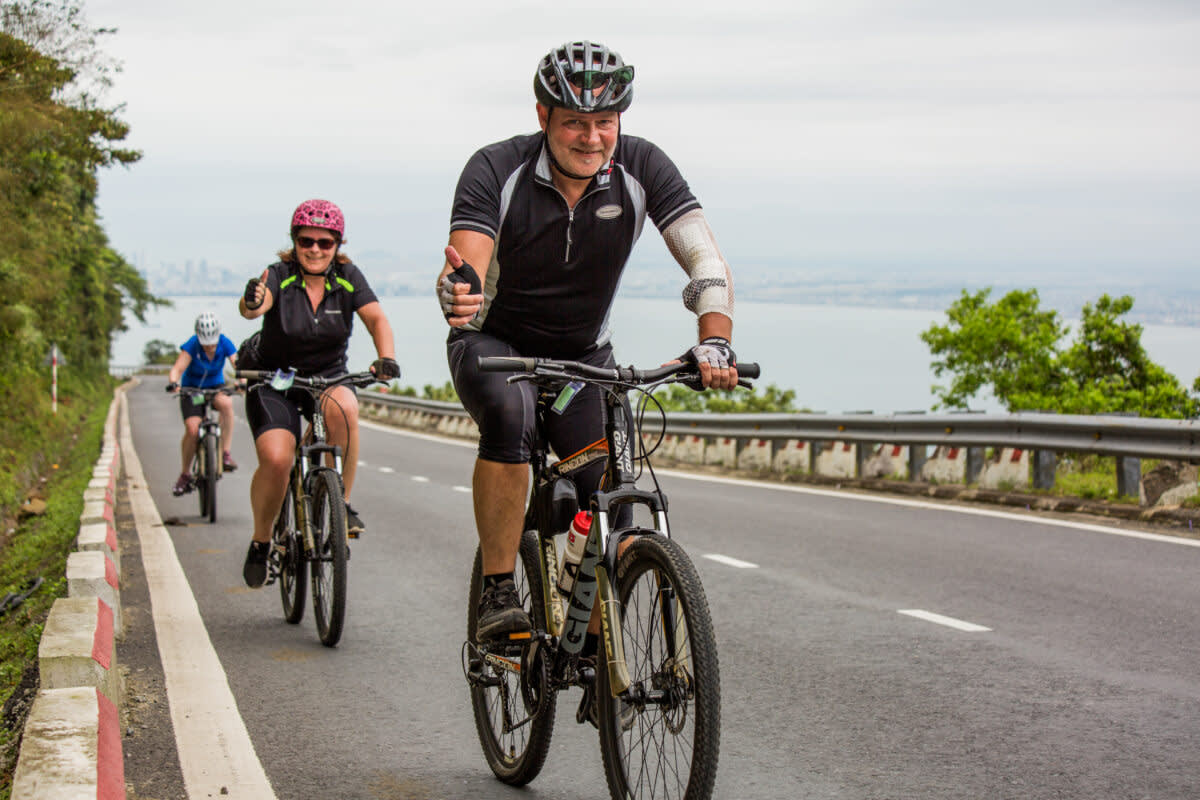
Vietnam is generally a welcoming destination for cycling holidays, especially in rural areas where local people are friendly and often curious to see cyclists passing through their villages. These local interactions are often one of the most memorable parts of our journeys.
Traffic in large cities can be busy and chaotic, so we carefully design our cycling routes to avoid the most congested areas where possible. Most rides focus on quieter countryside roads, village lanes, backroads, coastal sections, and scenic rural routes.
Safety is also strengthened on our trips by our experienced tour leaders, mechanics, support vehicles, water stops, and the option for you to skip sections if needed.
Can beginners do cycle tours in Vietnam?

Absolutely! Beginners can enjoy cycling tours in Vietnam, provided they select the right route. Flatter areas with countryside roads, and selected village routes are suitable for those who prefer a gentler pace.Look for itineraries with shorter daily distances, vehicle support, and flexible riding sections.
More challenging mountain routes in the far north are better suited to experienced or fitter cyclists. To make things easier, each Exodus itinerary is assigned an Activity Level, an overall indication of how difficult the trip is.
With a good support team, beginners can ride at a comfortable pace while still enjoying local culture, scenery, food, and village life along the way.
What is a typical day on a cycling tour like?
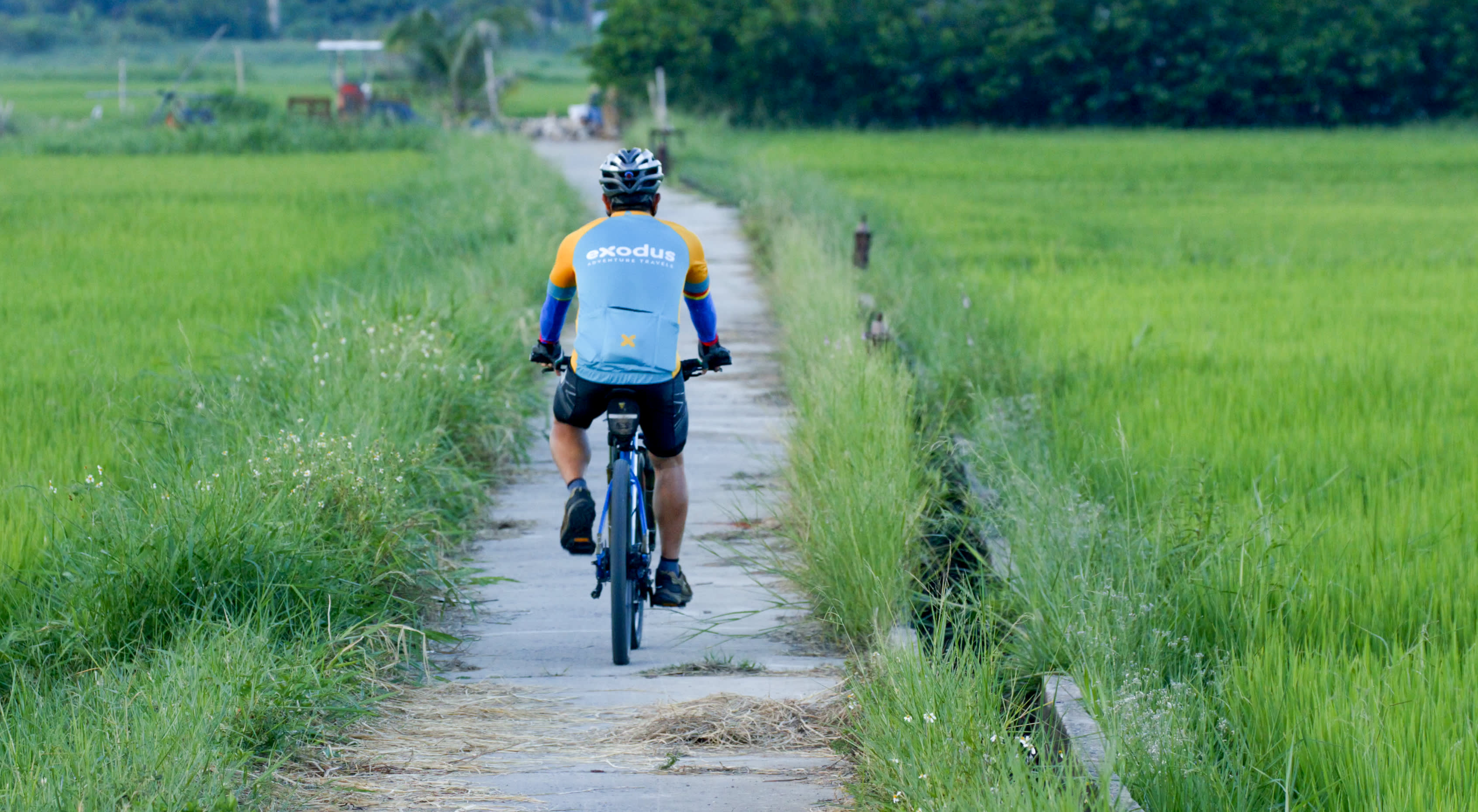

A typical cycling day in Vietnam usually starts early to avoid the heat. Riders may have breakfast around 6.30am and begin cycling around 7am.
The ride is usually broken up with regular stops for photos, water, fresh fruit, snacks, coffee, or local points of interest. Lunch is often served at a local restaurant, giving you the chance to try regional dishes and recover before continuing to the next destination.
Because Vietnam changes so much from region to region, each day can feel different. One day may focus on coastal scenery, another on rural villages, rice fields, mountain roads, or local markets. Evenings are usually relaxed, with regional food and time to rest and share stories from the day.
Do you need to bring your own bike to Vietnam?

No, you don’t need to bring your own bike to Vietnam. We have a good fleet, often from reliable brands such as Trek or Giant. Bikes are usually fitted according to each rider’s height and measurements.
Using local bikes is often more convenient, as bringing a personal bike can involve airline fees, packing requirements, and the risk of damage during travel. E-bikes are also available on selected tours.
However, you may still prefer to bring personal gear such as your own saddle, pedals, helmet, cycling shoes, or gloves for extra comfort and familiarity.
Is north or south Vietnam better for cycling?

Both northern and southern Vietnam are excellent for cycling, but they offer very different experiences.
North Vietnam is best for riders who want dramatic scenery, mountain roads, cooler temperatures, ethnic minority communities, and more challenging climbs. It is ideal for cyclists looking for a stronger adventure element.
South Vietnam, especially the Mekong Delta, is better for easier cycling, flatter routes, fruit farms, canals, rice fields, and a slower local pace. It is more suitable for beginners, relaxed riders, or those who want more cultural interaction with less physical difficulty.
Central Vietnam should also be considered, as it offers some of the country’s best coastal cycling, including the Hai Van Pass, fishing villages, heritage towns, and ocean views.
For the most complete experience, a cycling journey from Ho Chi Minh City to Hanoi gives riders a strong combination of southern delta life, central coastal scenery, and northern landscapes.
How fit do you need to be for a cycling holiday in Vietnam?

You do not need to be extremely fit to enjoy a cycling holiday in Vietnam, but I recommend basic preparation. You should be comfortable cycling for a few hours at a time and riding on consecutive days.
For easier routes, regular recreational cycling before the trip is usually enough. For mountain routes or longer cycling days, you should prepare with hill training, longer weekend rides, or general cardio fitness.
The main challenge in Vietnam is often the heat and humidity, so pacing, hydration, and rest stops are important. On our trips, the support team usually provides water, snacks, fresh fruit, and vehicle assistance throughout the journey.
Book the trip:

Cycling Vietnam
Ride from Ho Chi Minh City to Hanoi, witnessing Vietnam’s beauty unfold
From planning routes around the weather to knowing just where to pull over for a perfectly brewed cà phê sữa đá (Vietnam’s iconic iced coffee), the details Thanh has shared here come from years spent leading travellers across the country. They’re the same local insights, careful planning and on-the-ground knowledge that accompany every Exodus cycling adventure.
Because the best way to discover a country isn’t just on two wheels – it’s with someone who knows exactly where they can take you.